Not-
Found
Tampilkan postingan dengan label Magazine. Tampilkan semua postingan

THE CLIMB THAT LEFT ME FROZEN WITH FEAR


There are thousands of industrial chimneys in the Czech Republic, with many dating back to the late 19th Century - most are no longer used and a group of enthusiasts spend their weekends climbing the structures. Alastair Lawson joined them in Zelezny Brod, but soon regretted it.
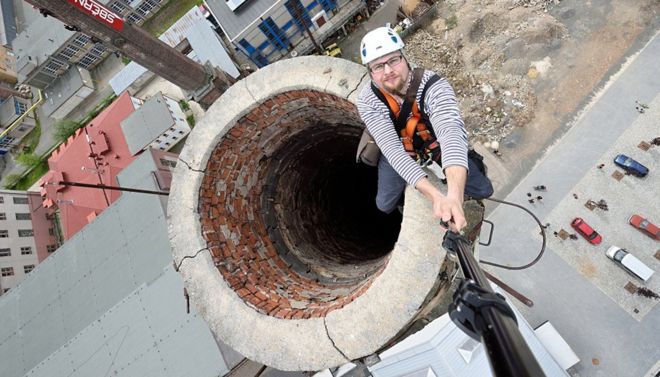
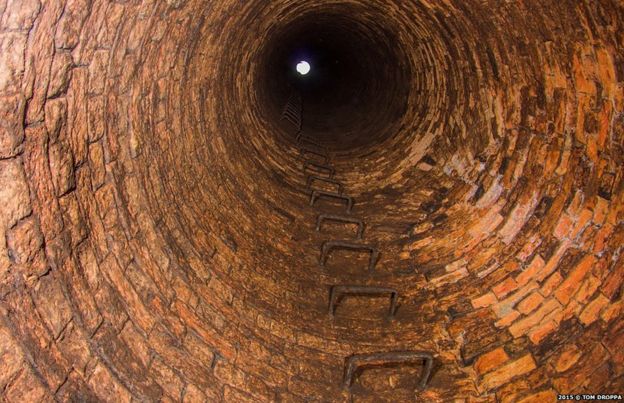
I am 40m (130ft) up a 120-year-old chimney in the north-east of the Czech Republic and I am having a minor panic attack. My legs feel like lead weights as I look down on the tiny figures on the ground below me.
"Are you coming up or going down?" asks my guide, Martin Vystejn, as I cling for dear life on to the ladder.
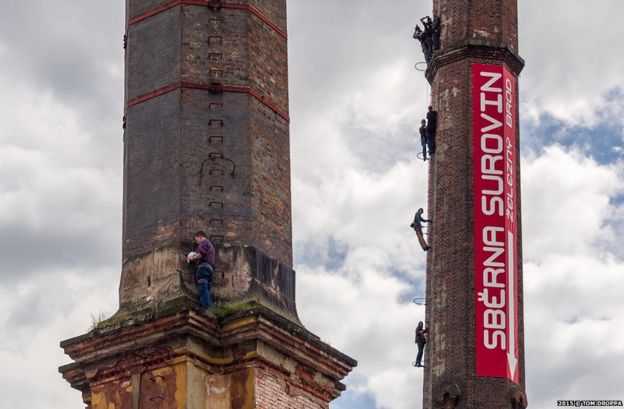
The fear gripping me is so overpowering that my inclination is to do neither and remain suspended in mid-air about two-thirds of the way up the 52m (170ft) disused industrial chimney.
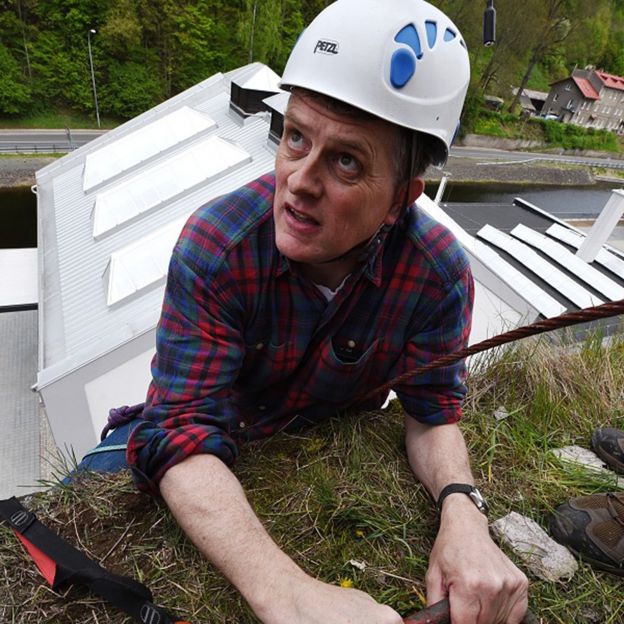
The other climbers seem unruffled by my agony and continue nonchalantly to make their ascent, neatly bypassing me on the ladder as I scuttle downwards.
So how did I end up in this predicament?
few weeks ago, I read a Czech media report about the activities of the Union of Czech Chimney Climbers, a club set up mostly to climb, but also to survey and lobby for the preservation of the country's 5,000 to 6,000 industrial chimneys.
They invited me to join them as they scaled two disused textile factory chimneys located alongside each other in Zelezny Brod, north-east of Prague.
Every weekend and bank holiday the climbers meet at the base of a different chimney. They are men and women from all walks of life, including graphic designers, shopkeepers, accountants and students. The one thing they have in common is a passion - verging on an obsession - for being high up above the ground.
The age range is equally diverse - from teenagers to a 76-year-old former track-and-field athlete who whizzed up the ladder at high speed, making me feel even more inadequate.

Posted by
Unknown

More

The climb that left me frozen with fear


There are thousands of industrial chimneys in the Czech Republic, with many dating back to the late 19th Century - most are no longer used and a group of enthusiasts spend their weekends climbing the structures. Alastair Lawson joined them in Zelezny Brod, but soon regretted it.
I am 40m (130ft) up a 120-year-old chimney in the north-east of the Czech Republic and I am having a minor panic attack. My legs feel like lead weights as I look down on the tiny figures on the ground below me.
"Are you coming up or going down?" asks my guide, Martin Vystejn, as I cling for dear life on to the ladder.
The fear gripping me is so overpowering that my inclination is to do neither and remain suspended in mid-air about two-thirds of the way up the 52m (170ft) disused industrial chimney.
The other climbers seem unruffled by my agony and continue nonchalantly to make their ascent, neatly bypassing me on the ladder as I scuttle downwards.
So how did I end up in this predicament?


few weeks ago, I read a Czech media report about the activities of the Union of Czech Chimney Climbers, a club set up mostly to climb, but also to survey and lobby for the preservation of the country's 5,000 to 6,000 industrial chimneys.
They invited me to join them as they scaled two disused textile factory chimneys located alongside each other in Zelezny Brod, north-east of Prague.
Every weekend and bank holiday the climbers meet at the base of a different chimney. They are men and women from all walks of life, including graphic designers, shopkeepers, accountants and students. The one thing they have in common is a passion - verging on an obsession - for being high up above the ground.
The age range is equally diverse - from teenagers to a 76-year-old former track-and-field athlete who whizzed up the ladder at high speed, making me feel even more inadequate.

Posted by
Unknown
More

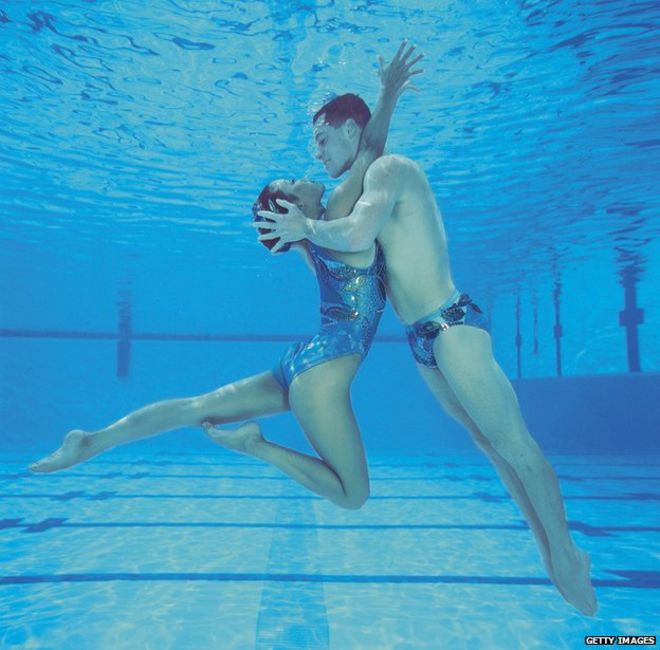
Why can't men be Olympic synchronised swimmers?

At the World Aquatics Championships, which begin this weekend in Russia, men will be competing in synchronised swimming for the first time. Men were a part of the sport at its inception, but until now they have always been barred from competing at the highest level. Will the door to the Olympics open next?
There is nothing in the world that can prevent 25 July 2015 from being the best day in Bill May's life. "It's something that I have dreamed of my entire life," he says, "to step out on that deck with the world's best."
Many already count May as one of the world's great synchronised swimmers. Next weekend, 11 years after he retired, he will get his chance to prove it. Whether or not he ends up winning his event, the chance to compete in the US team at the World Championships in the Russian city of Kazan is the delayed culmination of a career that has brought triumph and frustration in equal measure.
May made his big splash in 1998, when he and his partner Kristina Lum won the duet event at the US National Championships, then took silver at the Goodwill Games. He was named USA Synchro's athlete of the year in 1998 and 1999, and he went on to win 14 national events as well as titles in France, Germany, Italy and Switzerland.
But he was prevented from performing at the World Championships or the Olympics because it was seen at the highest level as a sport for women. May's coach Chris Carver said: "Let me tell you this - he not only would have made the team, he would have been among the very top of the competitors on the US team."

Posted by
Unknown

More

When the US president travels, the world stands still

US President Barack Obama pines for the moment when he can leave the security bubble. After 24 hours inside it, I can see why.
Mr Obama and his daughter Sasha, 14, walk across a tarmac in New York on Friday. He taps her shoulder and points towards Manhattan, showing her the world, or at least his version of it.
What a place.
They fly on Air Force One to one of New York's airports - and minutes later arrive by helicopter in Manhattan.
Streets are blocked off, and their motorcade glides to the Upper East Side. They run red lights - at least 26 over the weekend. Along the way people cheer. At one point a woman in a flowery sundress holds up a handmade sign: "FREE HUGS".
It's a New York fantasy, one of the perks of Mr Obama's job. He travels in a security zone, a "bubble" as it's known - a tightly managed network of aircrafts, vehicles and communication that lets him move easily around the world.

The bubble provides safety, but it's confining. In a recent briefing he sounded wistful about an upcoming trip to Kenya, his father's homeland. He made it clear he'd rather go without security restrictions.
"I'll be honest with you, visiting Kenya as a private citizen is probably more meaningful to me than visiting as president," Mr Obama said. "Because I can actually get outside of a hotel room or a conference centre."
He still has 18 months left in the bubble, though. For that reason it's worth looking at the experience - and considering what it means in terms of his worldview.
The presidential bubble is thick - and pricey. Mr Obama rides in the motorcade in a limousine known as the Beast, which is designed to withstand bullets and chemical attacks.
Mr Obama flies on a Boeing 747 jet that costs $180,000 (£116,000) per hour to operate - and can be refuelled in the middle of a flight. Electronic equipment on board is designed to withstand all kinds of duress, including force from an electromagnetic pulse, according to White House officials.
On the aircraft Mr Obama has a suite with its own bathroom, as well as an office and a conference room. He has access to classified material, and he can communicate with military officials if the US is under attack or is facing another kind of emergency.

Posted by
Unknown

More

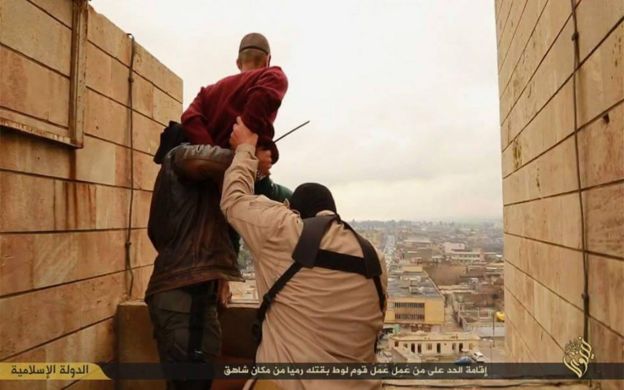
Why my own father would have let IS kill me


The group that calls itself Islamic State (IS or Isis) has a special punishment for gay people - it kills them by throwing them off high buildings. Taim, a 24-year-old medical student, tells the story of how he only escaped this fate by fleeing from Iraq to Lebanon.
In our society, being gay means death. When Isis kills gays, most people are happy because they think we're sick.
I first realised I was gay when I was about 13 or 14. I too thought homosexuality was a sickness and I just wanted to feel normal. During my first year of college, I started having therapy for it. My therapist told me to tell friends that I was going through a "difficult phase" and to ask for their support.
I'm of Muslim background but my ex-boyfriend was from a Christian background and I had a bunch of Christian friends, whom I used to hang out with. In 2013 I got into a fight with a fellow student, Omar - who later joined Isis - about hanging out with Christians. A friend of mine told him to go easy on me because I was going through a hard time, having treatment for being gay. That's how people knew. I think my friend's intention was noble but what happened as a result ruined my life.

Posted by
Unknown

More

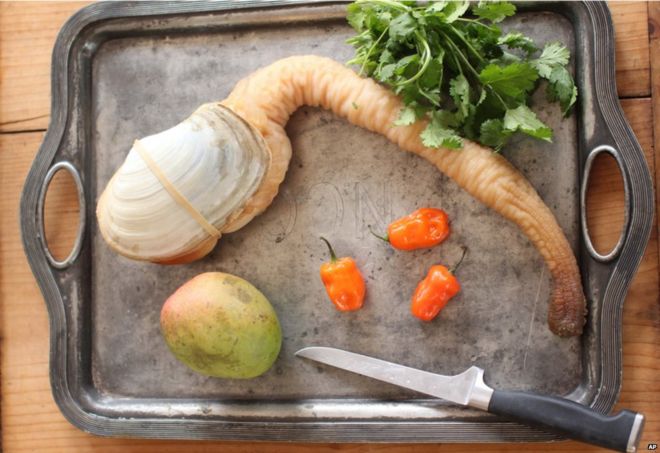
The 'phallic' clam America sells to China

It's not the most beautiful dinner to look at and it has a very odd name... but in China the geoduck is an expensive delicacy, so on North America's Pacific coast the race is on to farm them and cash in.
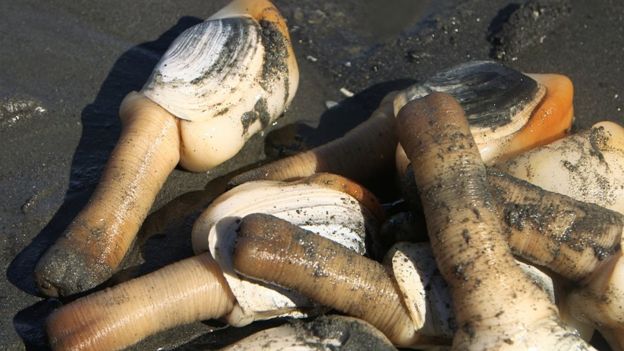
The first thing people notice is the shape - it's not nicknamed the King Clam for nothing.
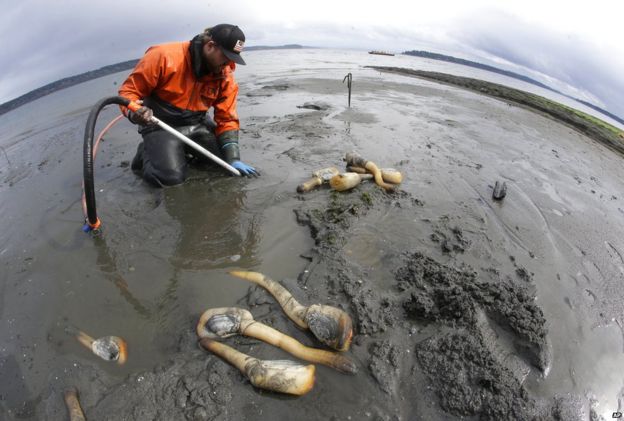
Its long, probing siphon bulges out of its shell and burrows through the sand - sucking in sea water, and squirting it out again (minus vital nutrients) from its tip.
Even its name sounds peculiar when pronounced correctly: "gooey-duck".
It is the largest burrowing clam in the world and can weigh up to 16lb (7.25kg), but it has another claim to fame.

It tastes delicious.
So delicious in fact that diners at high-end seafood restaurants in China will pay up to $300 (£200) for a fresh geoduck imported live from Canada or the US.
Its delicate texture and exotic looks are prized by connoisseurs - who consider the "elephant trunk clam", as it is known in China, to be an aphrodisiac.
"You really feel a mouthful of the Pacific... it's slippery, it's very tender, very sweet," said diners interviewed by the BBC in Beijing.

Geoduck - the vital statistics

  • The name "geoduck" is thought to come from the Nisqually (Native American) word "gweduc," meaning "dig deep"
  • The bivalve grows in the tidal flats of Oregon, Washington State, British Columbia and Alaska, on beaches with deep sandy substrate
  • It takes six years for a farmed geoduck to reach maturity but they can live up to 160 years- as measured by the rings on their shells
  • The siphon can grow to 1m (3ft) or more in length
  • The clams may be served sauteed, as chowder, sushi or sashimi, but are most often blanched in broth

Posted by
Unknown

More
Diberdayakan oleh Blogger.

Copyright © / Voodoo Pol

Template by : Urang-kurai / powered by :blogger